



Art once again takes centre stage at BAUM Fest.
The Art Zone brings together artists from different disciplines and creative backgrounds in a space dedicated to discovering new perspectives, techniques and ways of understanding creativity.
Painting, drawing, graphic art and different forms of artistic expression come together in an area where visitors can get closer to the artists’ work, discover their pieces and see everything that goes on behind each creation.
A space to look, discover and be surprised.
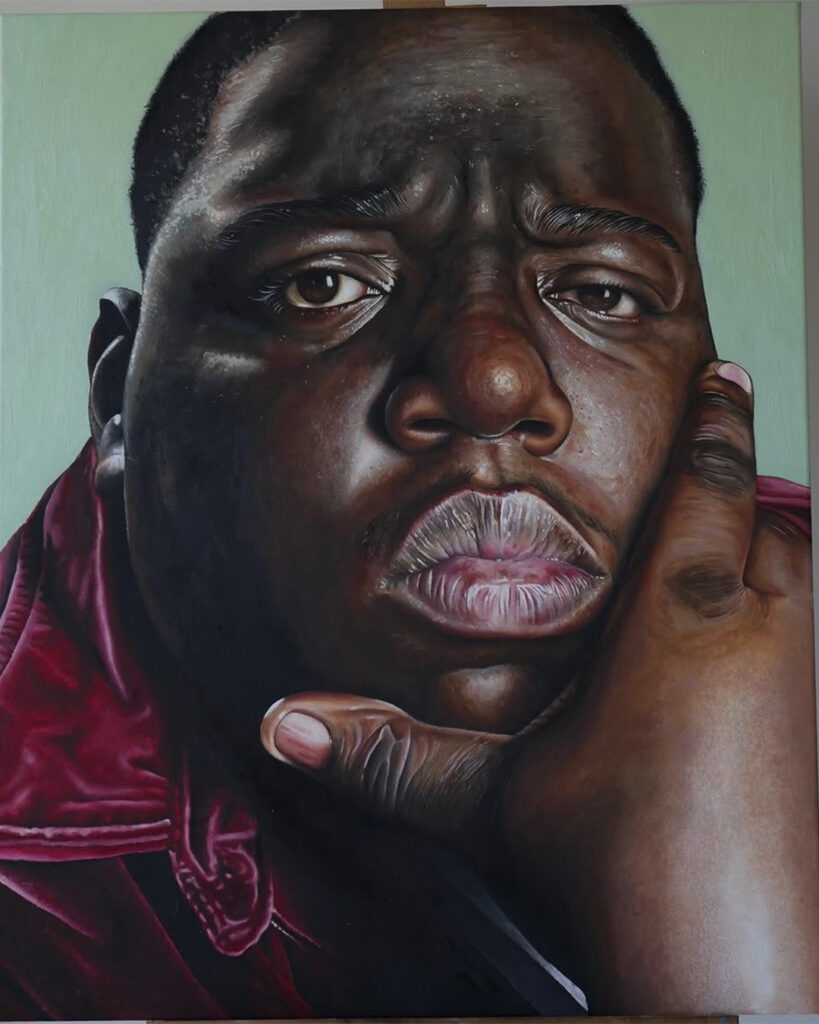
Judith Garcia Masip’s work stems from a sensitivity deeply connected to the human figure and the construction of images. In her work on canvas, we find an approach that gives equal importance to the subject and to the atmosphere surrounding it.
Her painting does not simply seek to reproduce an image: it explores presence, expression and what remains once the anecdotal disappears. The figure thus becomes a territory in which to explore identity, emotion and perception.
At BAUM Fest, Judith presents a facet of her creative universe in which the canvas becomes a space for exploration and freedom.
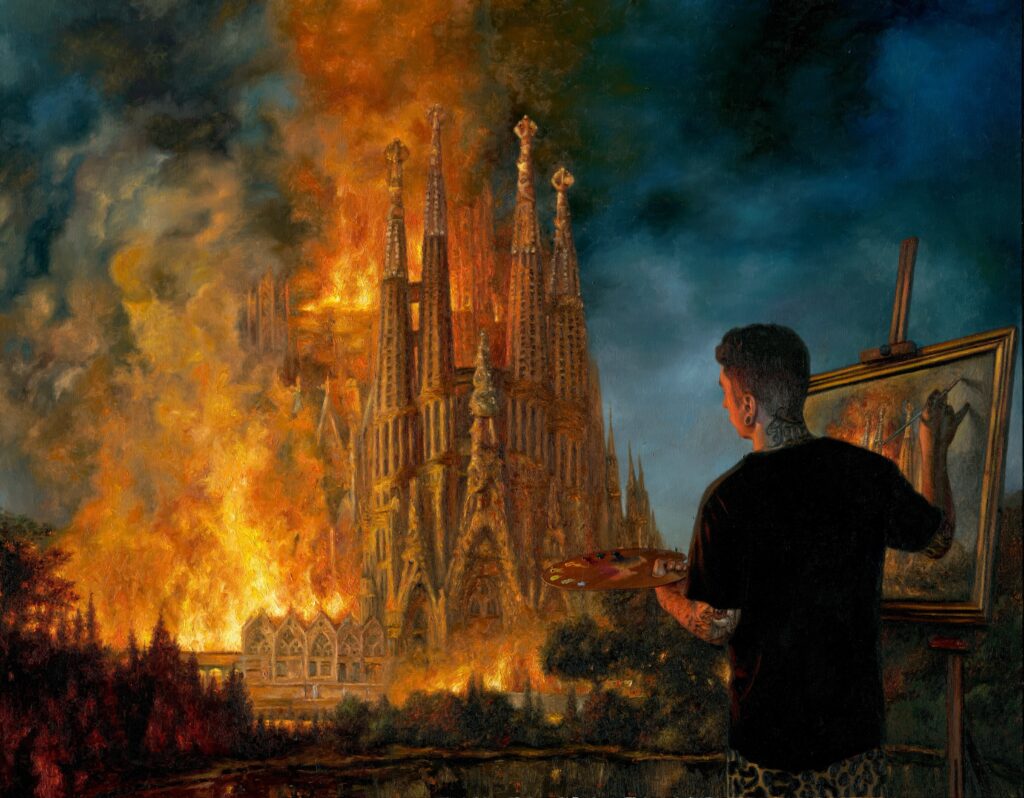
There is something unsettling about Albert Bonet’s painting, and that is precisely where much of its appeal lies.
His realism does not aim to be a neutral window onto reality. Bonet uses pictorial precision to draw the viewer into recognisable scenes that gradually begin to feel strange. Everyday objects, characters, popular references and seemingly ordinary situations take on a second meaning.
The result is painting with a strong narrative dimension, in which technical virtuosity is never used merely as a display of skill. Oil paint becomes a tool for addressing a reality that the artist observes from a critical perspective.
His visual universe draws from pop, punk, rap and contemporary culture, as well as from the figurative tradition. This combination allows him to create hyperrealistic images that, rather than simply representing reality, question it.
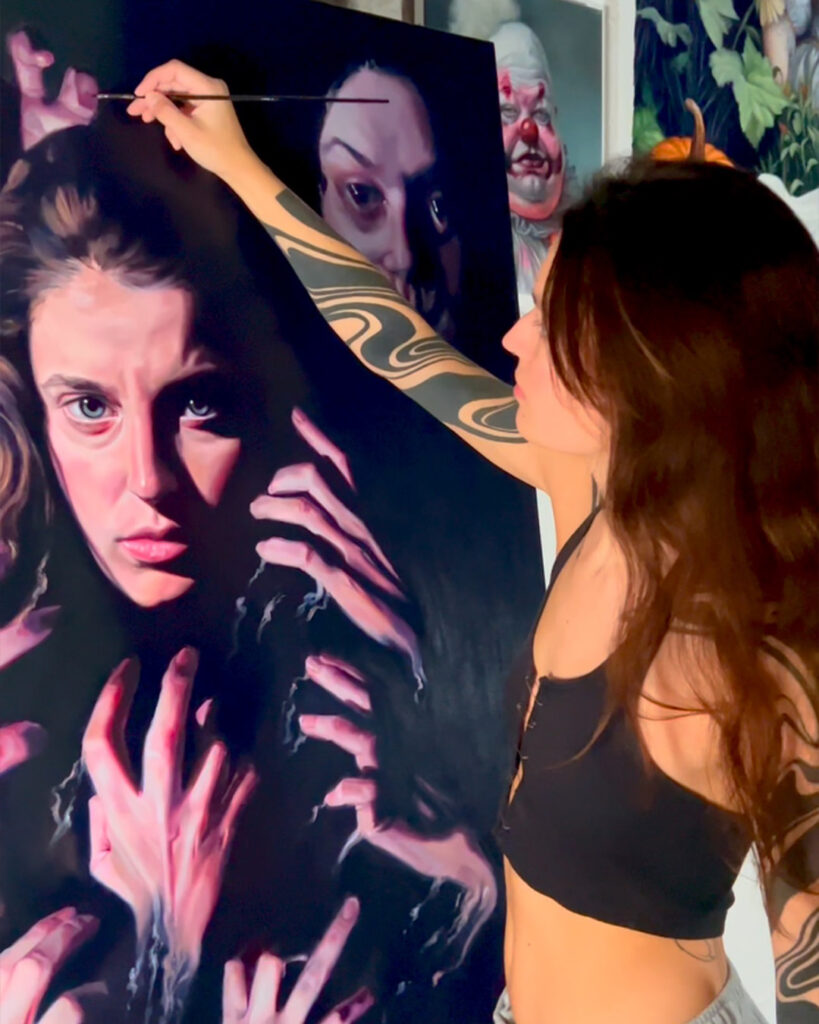
Nora Belvei’s painting moves through an unsettling territory: that space between dream and nightmare, where images seem to contain a story that is never fully explained.
Her recurring subject is the human figure. Bodies and faces appear surrounded by shadows, isolated within settings where the lack of information forces the viewer to complete what is missing.
There is something cinematic about the way she constructs her scenes. Her paintings resemble frozen frames from a story that has just taken place or is about to begin.
The precision of the figures contrasts with an unsettling atmosphere that leaves room for the imagination.
But Nora’s darkness is not purely aesthetic. Her painting also stems from an intimate exploration of fears, flaws and emotions that are difficult to put into words. In this way, the canvas becomes a place where what hurts can be transformed into an image.
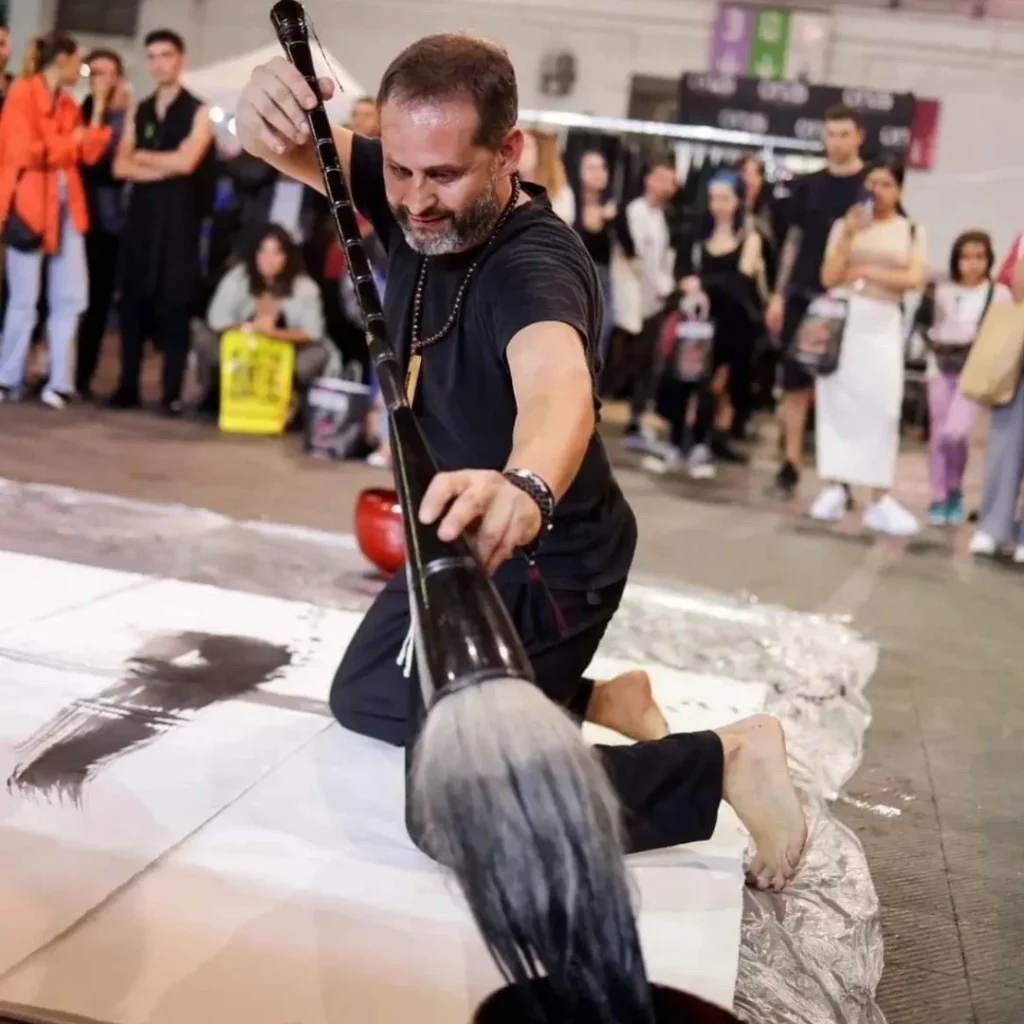
In the work of Hasu (Alberto Castañeda), painting recovers something essential: the value of the brushstroke.
His approach to Sumi-e, the Japanese painting tradition based on ink and an extreme economy of means, is built around contrast. Black and emptiness. Presence and absence. Control and spontaneity.
Rather than seeing empty space as something that is missing, Hasu turns it into an active part of the composition. Every movement of the brush carries weight, and every mark of ink contributes to the construction of the image.
There is also an almost meditative dimension to his work. The apparent simplicity of his pieces conceals an exercise in concentration and precision in which the painterly gesture becomes as important as what it represents.
His artistic journey begins with drawing and realism and evolves towards a language deeply connected to Sumi-e, sculpture and Zen-inspired art.
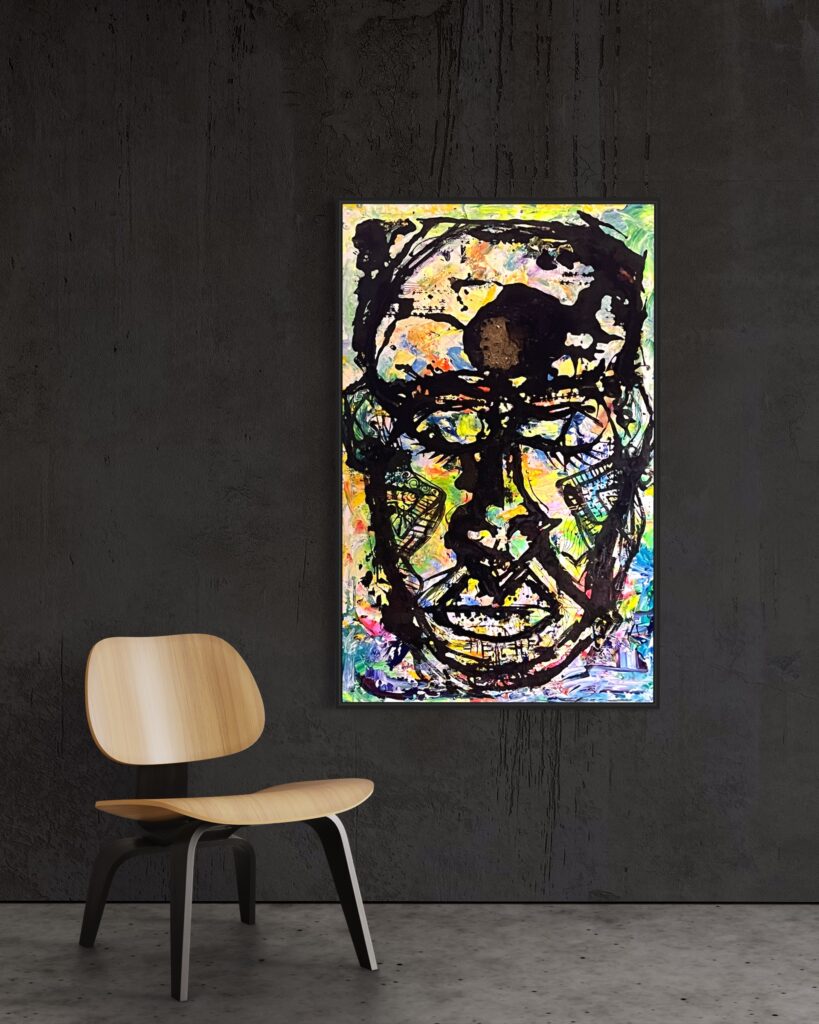
Héctor Luis Rodríguez’s artistic journey began with an early and almost instinctive relationship with drawing.
His career is defined by experimentation and by an approach to painting that does not seem to seek a single formal answer. Drawing, mural art and painting are all part of the same creative journey, in which the image becomes a tool for understanding and transforming the world around him.
There is also an autobiographical dimension to his career. His earliest drawings, the murals he created during his youth and the different stages of training and personal exploration all form part of an artistic journey developed outside particularly predictable paths.
His work retains this sense of exploration: painting understood as a process and a form of expression rather than as a fixed formula.
Under the name Rostro, Luis Valseca has developed a distinctive visual universe that extends from graphic work to artistic imagery.
His work draws on an aesthetic defined by the figure, contrast and a certain tension between the human and the symbolic. His images do not appear to have been created merely to be contemplated: they contain something of a story, a character and a world of their own.
His graphic production includes different series and visual universes — including Hikari Looking for the Fishermen, 1976, WildT and Miseri Cordia — which reveal a desire to build an artistic identity that goes beyond any single technique.
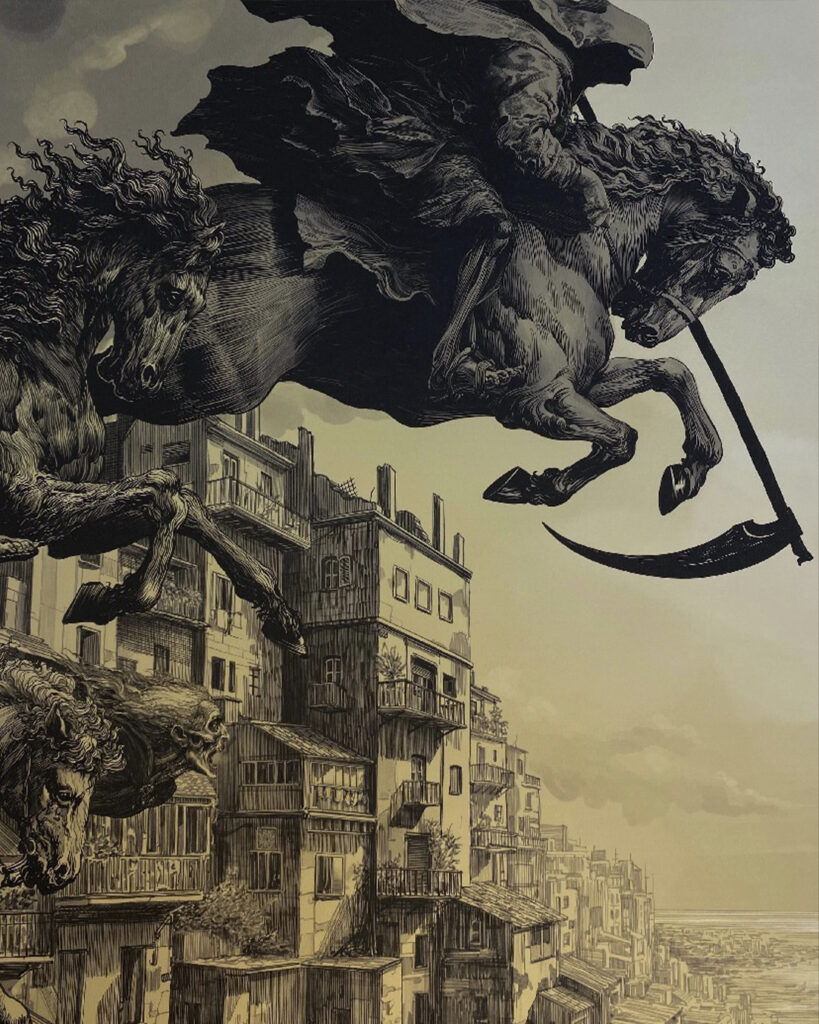
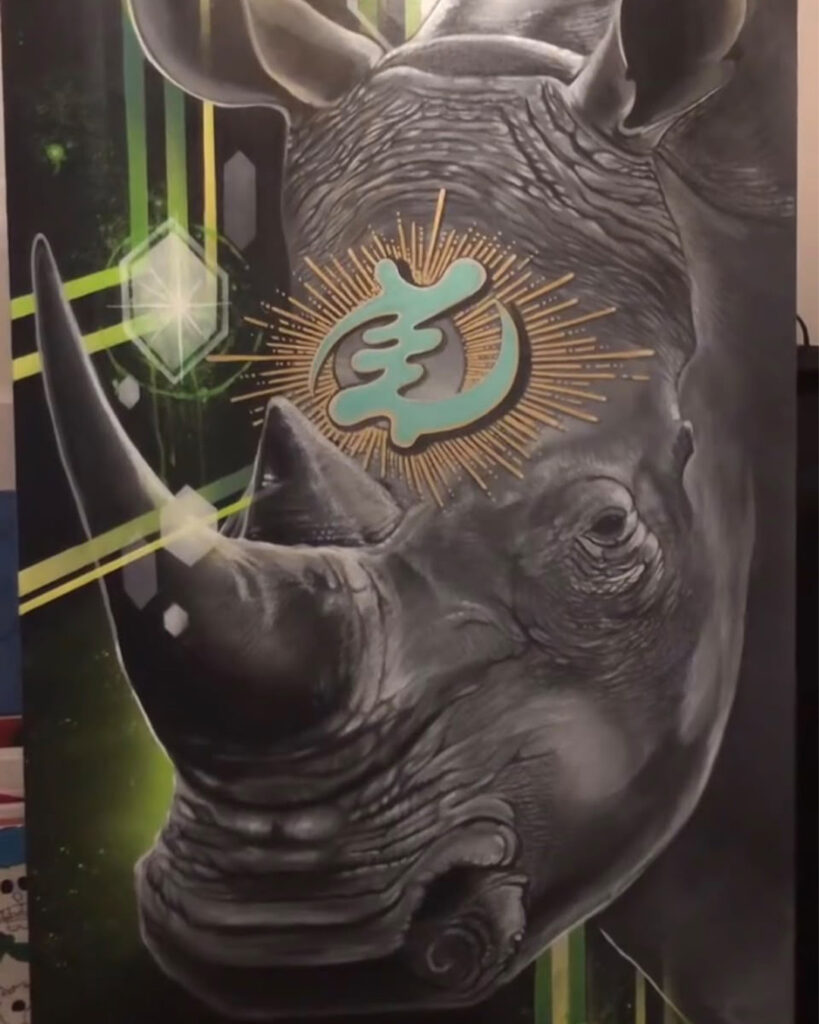
Raul Leone’s work is rooted in a direct relationship with figurative art and drawing, while finding in the canvas a territory different from that of the skin.
His painting revolves around the construction of images full of personality, in which drawing plays a structural role and the figure serves as the main narrative vehicle.
Rather than seeking a radical separation between art and contemporary visual culture, Leone works precisely within this meeting point: recognisable references, graphic composition and a personal perspective that transforms the image into a work of art.
At the BAUM Fest Art Zone, we will be able to discover this side of his work and explore a body of work created with the freedom that the canvas allows.
If your language is canvas, painting, drawing or any other form of artistic expression, this is your opportunity to become part of the BAUM Fest Art Zone.
Write to us and tell us who you are. We want to see your style and technique in action. Become part of the BAUM Fest 2026 Art Zone!
The Art Zone is an invitation to stop, look and discover.